
How Does Tesofensine for Weight Loss Saudia Arabia Help Burn Fat? Tesofensine has gained attention in weight loss research for

Yes. ARA 290 peptide (cibinetide) protects brain tissue in experimental models of neurological injury. In Saudia Arabia studies with cerebral ischemia in mice, researchers found that ARA 290 significantly reduced neuronal apoptosis and lowered levels of inflammatory cytokines in the injured brain when compared to untreated controls. The peptide acted through its receptor pathway that targets cellular protection, and when that pathway was blocked, the protective effects did not occur, showing a direct link between ARA 290 activity and reduced brain injury.
Additional research shows that this peptide’s design keeps it from stimulating red blood cell production while still engaging protective signaling in nervous tissue. In controlled settings, ARA 290 limited the immune activation that drives inflammation and supported survival signals in neurons, which contributes to neuroprotection in research.
Explore ARA 290 Peptide from Direct Peptides Saudia Arabia, a peptide studied for brain protection, stress resilience, and functional brain response pathways.

Saudia Arabia Research shows that the ARA 290 peptide can help neurons cope with prolonged stress in verified preclinical models. In mouse studies designed to mimic chronic unpredictable stress, daily ARA 290 administration reduced behavioral changes linked to long-term stress and lowered activation of brain immune cells associated with stress responses. The peptide reversed stress-induced changes in immune cell populations in brain borders, indicating that it helped maintain more normal neural signaling under chronic stress conditions.
These findings demonstrate that ARA 290 peptide supports neural resilience not just by reducing acute injury but by modulating the impacts of sustained stress on neurons. In these models, ARA 290 reduced microglial activation, which is linked to stress-related neuronal strain, and helped maintain neural function when compared with untreated animals. This evidence supports a role for ARA 290 in helping neurons resist stress-related damage in research.
Explore Peptide Supplies at Direct Peptides for all your reconstitution requirements.
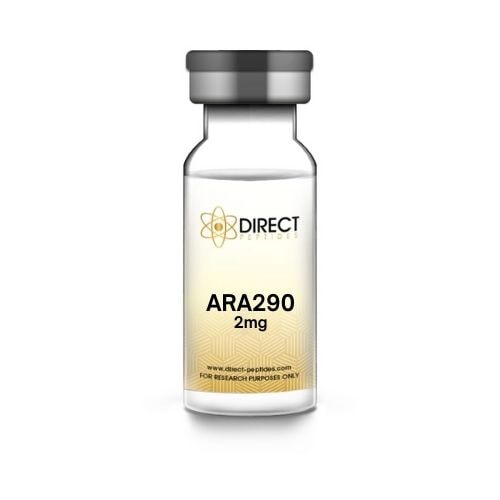
Yes. A human neuropsychological study measured how ARA 290 (cibinetide) affects brain responses to emotional stimuli after administration. In this double-blind study, healthy volunteers received a dose of ARA 290 peptide and then performed tasks involving emotional facial expressions. Researchers found that ARA 290 reduced neural responses in the fusiform gyrus when participants viewed happy faces, showing a real change in how the brain processed visual and emotional information.
ARA 290 also tended to lower recognition accuracy for some emotional expressions, and it increased attention toward positive images, indicating a functional effect on brain signaling rather than tissue structure. At the same time, it did not improve memory for positive words, showing the effect does not extend to learning or recall in this model.
These findings support that ARA 290 can influence specific brain function patterns in controlled research, separate from its roles in tissue protection, inflammation reduction, and neuron survival.
Alongside ARA 290 peptide, researchers have also examined a small number of peptides for their role in brain signaling and cognitive regulation within controlled research models.
Discover Semax from Direct Peptides Saudia Arabia, a research peptide examined for its role in brain signaling, attention regulation, and cognitive-related neural activity.
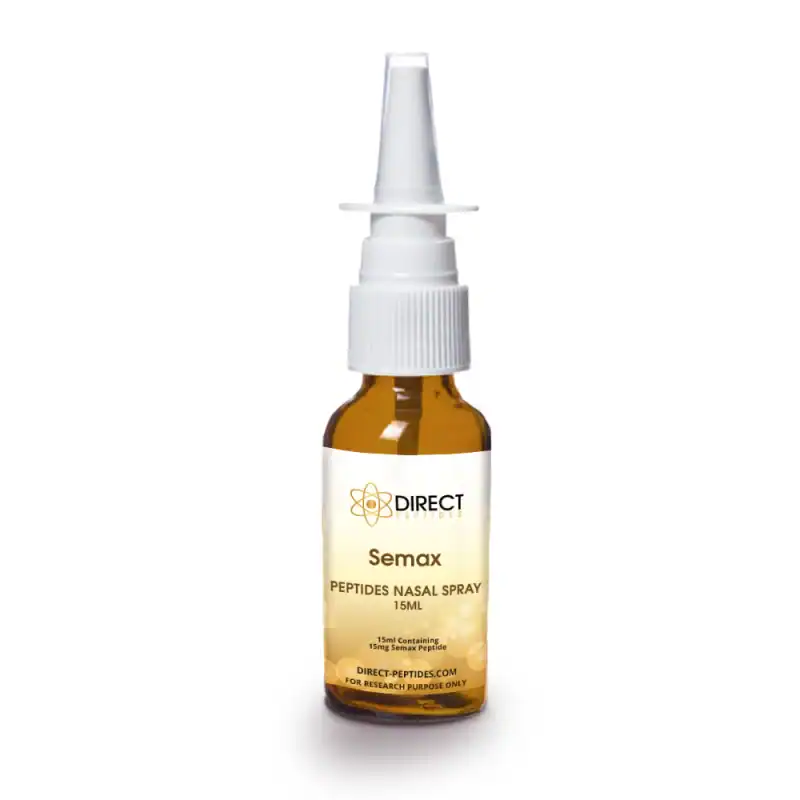
Semax is a synthetic heptapeptide originally developed from a fragment of ACTH (4-10) and is studied for its effects on neural signaling and cognitive outcomes. In rat studies, Semax increased levels of brain-derived neurotrophic factor (BDNF) and related receptors in areas like the hippocampus, a brain region critical for neural communication and cognitive processes.
Additionally, imaging studies report that Semax alters activity in networks involved in attention and resting brain states, specifically showing changes in default mode network connectivity shortly after administration. These findings suggest that Semax affects aspects of brain function, such as neural signaling and cognitive patterns, separate from basic structural protection.
In controlled study models, Selank appears to influence brain activity related to neurotransmission, anxiety regulation, and cognitive processes. Animal studies indicate that the peptide changes the expression of genes involved in neurotransmission, including those connected to dopamine and serotonin receptors. These shifts suggest that Selank targets neural signaling pathways that play a role in mood and mental activity.
Selank also demonstrates effects on anxiety and stress-related behavior that relate to functional signaling rather than just tissue structure. In controlled experiments, it reduced anxiety indicators and produced effects similar to standard anxiolytic compounds by influencing GABA-related systems. Furthermore, Selank supported cognitive processes in animal models, helping to restore attention and learning performance disrupted by neural dysfunction.
Shop Selank from Direct Peptides Saudia Arabia, a peptide studied for its influence on neurotransmitter balance, anxiety-related brain function, and cognitive regulation.
| ARA 290 Peptide | Semax | Selank |
|---|---|---|
| Studied mainly for brain protection and response to injury or prolonged stress | Studied for effects on brain signaling, attention, and cognitive-related activity | Studied for effects on neurotransmitter balance and anxiety-related brain function |
| Research highlights reduced neuronal damage and changes in brain response patterns | Research highlights increased neurotrophic signaling and altered brain network activity | Research highlights modulation of dopamine, serotonin, and GABA-related systems |
| Focuses on tissue-level protection and functional brain responses | Focuses on cognitive signaling and neural communication | Focuses on emotional regulation and cognitive control mechanisms |
Current research suggests a growing interest in ARA 290 peptide as a tool for studying how the brain responds to injury, stress, and functional challenges. As study models become more refined, researchers continue to explore where ARA 290 fits within broader brain-focused research without overstating its role.
At the same time, peptides such as Semax and Selank highlight distinct research directions in brain signaling, cognition, and neural balance. Together, these peptides reflect a forward-looking research landscape, where multiple approaches help deepen understanding of brain function in controlled research.
[1] Wang RL, Yang ZH, Huang YY, Hu Y, et al. Erythropoietin-derived peptide ARA290 mediates brain tissue protection through the β-common receptor in mice with cerebral ischemic stroke. CNS Neurosci Ther. 2024 Mar;30(3):e14676.
[2] Xu G, Zou T, Deng L, Yang G, et al. Nonerythropoietic Erythropoietin Mimetic Peptide ARA290 Ameliorates Chronic Stress-Induced Depression-Like Behavior and Inflammation in Mice. Front Pharmacol. 2022 Aug 15;13:896601.
[3] Cerit H, Veer IM, Dahan A, Niesters M, et al. Testing the antidepressant properties of the peptide ARA290 in a human neuropsychological model of drug action. Eur Neuropsychopharmacol. 2015 Dec;25(12):2289-99.
[4] Shadrina M, Kolomin T, Agapova T, Agniullin Y, et al. Comparison of the temporary dynamics of NGF and BDNF gene expression in rat hippocampus, frontal cortex, and retina under Semax action. J Mol Neurosci. 2010 May;41(1):30-5.
[5] Volkova A, Shadrina M, Kolomin T, Andreeva L, et al. Selank Administration Affects the Expression of Some Genes Involved in GABAergic Neurotransmission. Front Pharmacol. 2016 Feb 18;7:31.
Selank Nasal Spray
Price range: £42.58 through £79.16 Select options This product has multiple variants. The options may be chosen on the product page
Semax Pre-Mixed Pen 2mg Peptide
Price range: £25.19 through £68.01 Select options This product has multiple variants. The options may be chosen on the product page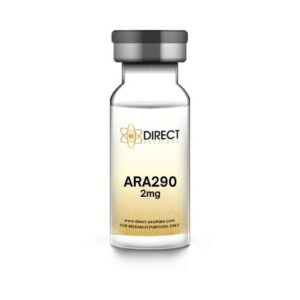
ARA290 Peptide Vial
Price range: £8.33 through £17.31 Select options This product has multiple variants. The options may be chosen on the product page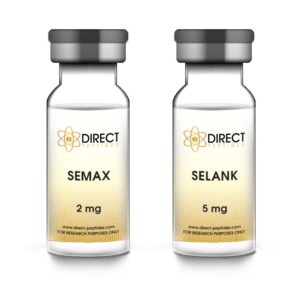
Semax Selank Peptide Stack
Price range: £29.50 through £38.42 Select options This product has multiple variants. The options may be chosen on the product pageHow Does Tesofensine for Weight Loss Saudia Arabia Help Burn Fat? Tesofensine has gained attention in weight loss research for
Bacteriostatic Water vs Sterile Water Saudia Arabia: What Really Sets Them Apart? Bacteriostatic water vs sterile water both are clear

How the Hexarelin CJC-1295 Stack Saudia Arabia Promotes Joint and Tendon Healing? In the ever-evolving field of regenerative medicine and

Adamax vs Semax Saudia Arabia: What Are the Key Differences? In the world of cognitive health research, Adamax and Semax